
Key Takeaways
- Mosquitoes need standing water to complete their life cycle, which is why they keep coming back to the same yards.
- Store-bought sprays typically miss the daytime hiding spots where mosquitoes actually rest.
- A consistent insecticide barrier does far more to reduce mosquito activity than one-off applications.
- Professional treatment covers more ground, reaches more resting surfaces, and lasts longer than anything off a shelf.
- Ongoing property management is what keeps new generations of mosquitoes from taking hold.
What Is a Mosquito Killer Spray?
A mosquito killer spray is a treatment designed to knock down adult mosquitoes on contact and, in many cases, disrupt the next generation before it hatches. Rather than simply masking your scent the way a repellent does, this kind of treatment physically reduces the population living on your property.
Most professional-grade formulations balance strong performance with responsible use around people, pets, and the surrounding landscape. Depending on the product, the active ingredient may be a synthetic pyrethrin or a botanical compound — both work by targeting the insect’s nervous system on contact. Either way, the goal is the same: create a treated zone where mosquitoes can’t comfortably rest or breed, so your yard actually feels like yours again.
The right approach depends on your property — how dense the foliage is, how much shade you have, and where moisture tends to collect. A properly applied mosquito killer spray leaves a residual layer on the surfaces mosquitoes prefer, which is what separates a treatment that lasts weeks from one that wears off by the next morning. At BuzzGuard, our mosquito defence service is built around exactly this kind of targeted, lasting coverage.
Problem #1 — You Can’t Use Your Own Backyard
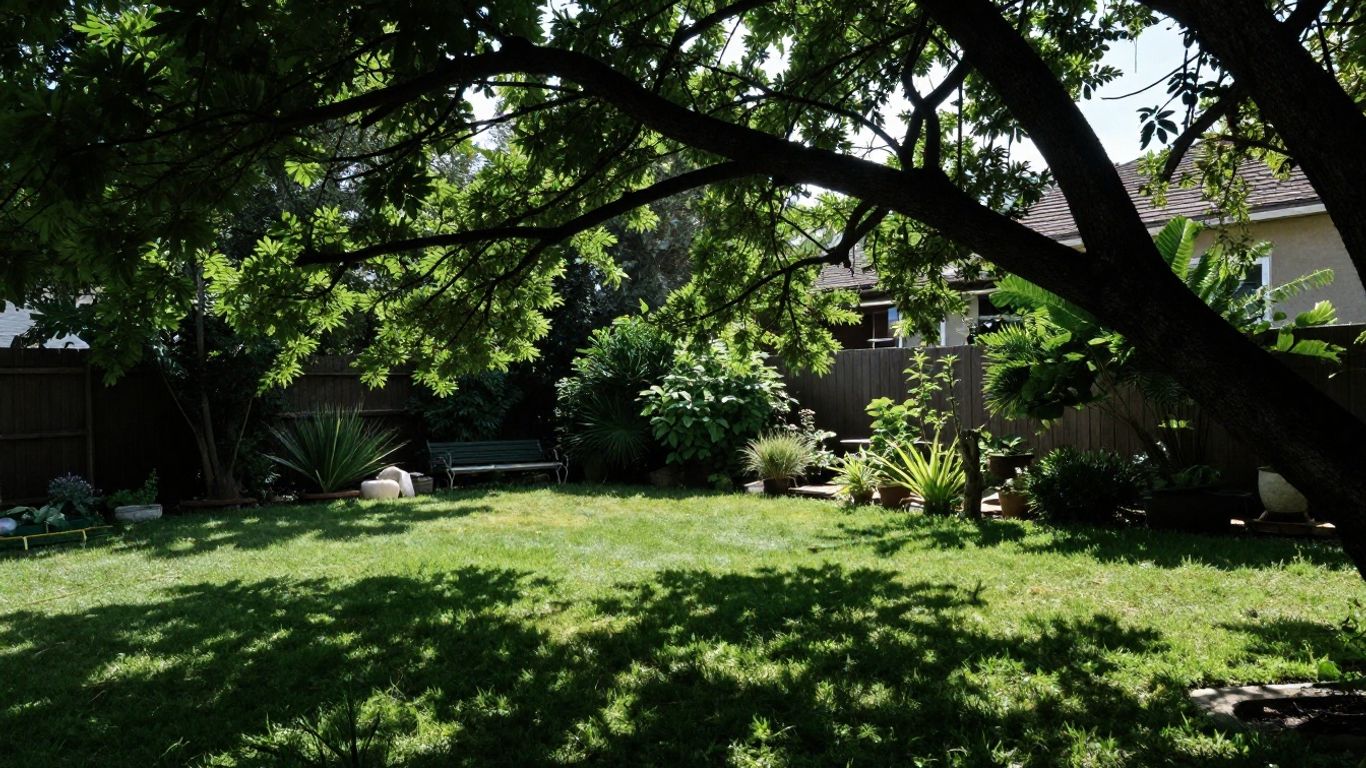
For a lot of homeowners, peak mosquito season means the backyard becomes off-limits. Dinner on the patio, a quiet evening outside, even five minutes of yard work — all of it gets cut short by constant biting. It’s frustrating to put time and money into your outdoor space only to end up avoiding it for half the summer.
The irony is that a well-landscaped yard, with mature trees, shrubs, and garden beds, often gives mosquitoes exactly the shaded, sheltered spots they’re looking for during the day. That means the nicer your yard looks, the more likely it is to double as a mosquito refuge.
This is where targeted treatment makes the biggest difference. Rather than spraying the open lawn where mosquitoes rarely sit, effective treatment focuses on the undersides of leaves, garden beds, and shaded corners — the exact places mosquitoes retreat to when the sun is out. Once those resting spots are treated, the yard opens back up, and you can host a barbecue or just sit outside without constantly swatting.
Problem #2 — Mosquitoes Keep Coming Back No Matter What You Try
If you’re spraying regularly and still seeing new mosquitoes the next day, the issue usually isn’t the spray itself — it’s the life cycle you’re not addressing. Mosquitoes don’t live for weeks as a static population; new adults are constantly emerging from nearby water sources. Killing today’s mosquitoes does nothing to stop tomorrow’s batch from hatching.
Generic sprays often only offer a quick knockdown that fades within hours, so without a longer-lasting residual effect, you end up re-applying constantly and never actually getting ahead of the problem. It’s a cycle that can eat up an entire weekend and still leave you swatting by dusk.
Breaking that cycle takes a different approach — one that treats the property as a whole rather than chasing individual mosquitoes. A barrier applied at the edges of your property, combined with regular treatment of resting areas, stops new arrivals while also clearing out what’s already there. That’s the logic behind scheduling treatments on a set cycle instead of spraying reactively whenever mosquitoes get bad.
Problem #3 — Standing Water and Overgrown Areas Keep Breeding New Mosquitoes
Controlling mosquitoes isn’t only about spraying — it’s about spotting the small features in your yard that quietly function as breeding grounds. Even a tiny amount of standing water gives mosquito eggs a safe, protected place to develop, and if those spots go unaddressed, new mosquitoes will keep emerging no matter how much you treat the adult population.
Some of the most common breeding spots in residential yards include:
- Clogged gutters holding stagnant leaves and rainwater
- Birdbaths or small ponds without any water circulation
- Buckets, planters, or containers that collect rainwater
- Overgrown brush or tall grass along fence lines and property edges
Even something as small as a bottle cap holding a bit of rainwater can support dozens of larvae. Clearing standing water and keeping vegetation trimmed back doesn’t just reduce mosquito numbers on its own — it also makes any spray treatment you do apply far more effective, since there are fewer new mosquitoes constantly replacing the ones that were treated.
Problem #4 — Health Risks From Mosquito Bites
Beyond the itching, mosquitoes are a genuine health concern. Certain species in Ontario can carry viruses such as West Nile virus and Eastern Equine Encephalitis, and letting mosquito populations build up near your home increases the odds of exposure for your family and pets.
| Risk | What Happens | Why It Matters |
|---|---|---|
| Viral transmission | Some mosquitoes carry viruses linked to serious illness | Increased risk of a more severe health event |
| Allergic reaction | Mosquito saliva can trigger a strong skin response | Swelling, intense itching, discomfort |
| Secondary infection | Scratching broken skin lets bacteria in | Localized infection or dermatitis |
None of this means every bite leads to illness — most don’t. But it’s a good reason to treat mosquito control as more than a comfort issue. If you’re noticing heavier mosquito or tick pressure around your property, our team can walk you through what a professional mosquito and tick defence program actually covers.
Problem #5 — DIY Sprays Aren’t Reaching the Real Problem Areas
Consumer sprayers — whether it’s a hose-end attachment or a small handheld pump — are usually limited in both reach and mist consistency. Mosquitoes spend their daylight hours tucked under leaves and in dense shade, and if your spray isn’t coating those undersides evenly, the mosquitoes hiding there come out completely unaffected once the sun goes down.
There’s also a real difference in the products themselves. Store-bought formulas are diluted for safe use by untrained homeowners, which means they typically need frequent reapplication just to match the initial effect of a professional-grade treatment. Professional products are often formulated to hold up better under sun exposure, so the active ingredient keeps working on treated foliage instead of breaking down within hours.
Put simply: if you’ve tried spraying your own yard and the mosquitoes came right back, it’s rarely because the product failed — it’s usually because the equipment couldn’t push the treatment deep enough into the vegetation where mosquitoes actually live.
Professional Mosquito Killer Spray vs. DIY Store-Bought Options
There’s a meaningful gap between what you can buy off a shelf and what a licensed technician applies. Store-bought sprays are designed to be safe for anyone to use without training, which generally means a weaker, shorter-lasting formula that needs to be reapplied often to keep up.
A professional crew brings a few things a store-bought can simply can’t:
- Equipment built for consistent, even coverage across large or dense properties
- Familiarity with local mosquito pressure and seasonal patterns in your region
- Application technique that targets resting and breeding zones specifically, not just open lawn
Store-bought sprays still have a place — they’re fine for a single event or a quick patio touch-up. But for a mosquito-free yard across an entire season, most homeowners find that a scheduled professional treatment saves far more time than it costs. And since mosquitoes are rarely the only backyard pest worth addressing, it’s worth asking your provider whether tick and other seasonal pest coverage can be bundled into the same visits — something our team is happy to walk through on a free quote call.
What to Expect From a Mosquito Killer Spray Treatment
A professional treatment typically starts with a full property walk-through. A technician identifies the high-risk spots — dense shrubs, shaded garden beds, tall grass along the property line — and tailors the application to your yard’s specific layout rather than treating every property the same way.
Most homeowners notice a significant drop in mosquito activity within hours of treatment. Because the product has a residual effect, protection continues working for weeks afterward rather than washing away with the first rain or humid stretch.
From there, treatments are typically scheduled on a recurring cycle throughout the season — at BuzzGuard, that’s roughly every 21 days, timed to the mosquito life cycle — so a new generation never gets the chance to establish itself before the next visit. Over a season, that turns your yard from a place you’re constantly battling into one you can just enjoy. You can see exactly how the process works, from quote to treatment, on our mosquito defence experts, or check our FAQ page for specifics on safety, timing, and what to expect on service day.
Conclusion
Getting ahead of a mosquito problem takes more than the occasional can of spray. It means understanding where mosquitoes breed, closing the gaps in your own yard’s defenses, and applying treatment that actually reaches the places mosquitoes hide. Once that’s in place, your backyard stops being something you avoid and goes back to being something you actually use — which, especially during a short Canadian summer, is worth the investment.
If your yard has become a no-go zone every evening, get a free quote and see what a season of consistent mosquito defence looks like. BuzzGuard proudly serves homeowners across Ottawa, Durham, Barrie, and the Kawartha Region.
Frequently Asked Questions
Do mosquito killer sprays only kill on contact?
Most professional sprays work two ways — they knock down adult mosquitoes on contact and leave a residual layer on foliage that continues working for days or weeks afterward.
Is it safe for kids and pets to be on the lawn after treatment?
Generally, yes, once the product has dried — usually within 30 to 60 minutes depending on temperature and humidity. Always follow the specific guidance your provider gives for your property.
How often should mosquito spray be reapplied in summer?
Store-bought products often need reapplication every few days to hold a barrier, while professional treatments are formulated to last several weeks between visits.
Can these sprays be used near a vegetable garden?
Standard insecticide sprays shouldn’t be applied near food crops unless the label specifically states it’s safe for that use. If part of your yard includes a vegetable garden, mention it during your property assessment so treatment can be planned around it.
Why do mosquitoes come back so quickly after spraying?
Usually because the spray didn’t reach daytime resting spots, or because nearby standing water is continuously producing new mosquitoes regardless of how many adults were treated.
Does wind affect how well a mosquito spray works?
Yes — wind can carry the spray off target and cause uneven coverage, which is why treatments are best applied on calmer days for full effectiveness.
What if I still see mosquitoes after a professional treatment?
Reputable providers will come back and reassess. Under the BuzzGuard guarantee, if you’re still seeing activity after treatment, we’ll return and re-treat at no additional cost.